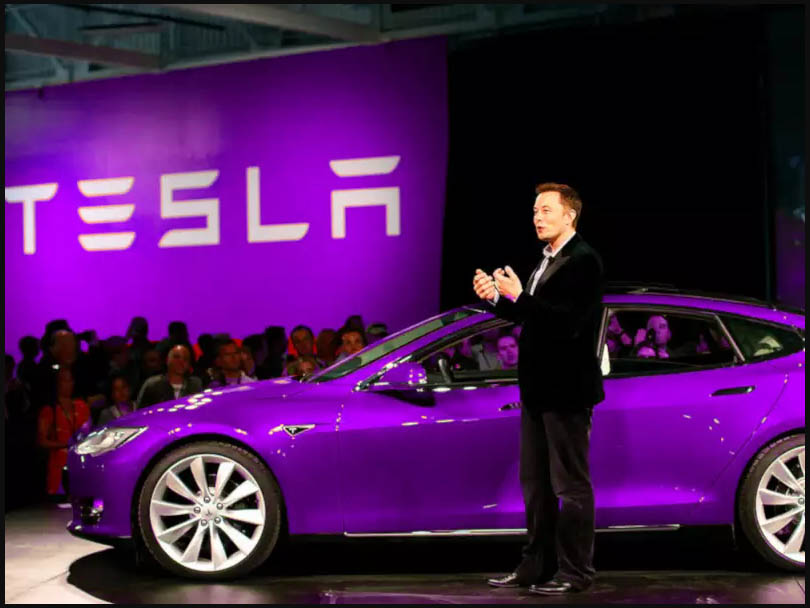
No other carmaker comes close to matching its performance, which includes posting record revenue
Anyone who Googles the phrase “Tesla failed” is immediately inundated with the purported shortcomings of the car and clean-energy company’s zeroemission electric vehicles (EVs), workplace culture, business practices, occupational safety and, especially, its controversial CEO, Elon Musk. In times like these, it is appropriate to recall what Gertrude tells her son Hamlet in Shakespeare’s most famous play: “The lady doth protest too much, methinks.”
When it comes to Tesla, such criticism is little more than a sideshow. No other carmaker comes close to matching its performance, which includes posting record revenue each year since it began reporting financial results in 2007. With a stock market value of $659bn on Friday, Tesla is worth more than Toyota, Mercedes-Benz Group, Volkswagen, BMW, General Motors, Stellantis and Ford combined.
And while everyone thought Musk’s entanglement with Twitter would be damaging to Tesla, the results prove otherwise. Tesla is now turning every $100 of revenue into an industry-leading $26 of profit after production costs the widest gross margin since it started selling more than 50,000 cars annually in 2015.
Tesla also scores the highest profit margin among the 10 largest carmakers, providing a huge competitive advantage by allowing it to invest more money into improving its cars and developing new products than its peers.
Musk teased as much in recent weeks, saying Tesla will reveal more details about its’ s smaller, cheaper nextgeneration electric-vehicle platform at its investor day on March 1. Given the company already dominant market share in the EV industry, it’s probably a day that its competitors are dreading.
It’s little wonder that 30 analysts have a buy recommendation on Tesla, a record for the company going back to its initial public offering in 2010. The number of upgrades rose 32% last year even though Tesla’s shares plummeted 65% amid a nasty bear market for tech stocks.
TESLA ALSO SCORES THE HIGHEST PROFIT MARGIN AMONG THE 10 LARGEST CARMAKERS
The Bloomberg Recommendation Consensus Rating, which quantifies analyst forecasts, reveals that no other carmaker was so emphatically upgraded.
Perhaps the reason analysts are enamoured with Tesla is that it continually proves the doubters wrong in a business once considered impregnable. Annual sales of its flagship Model 3 sedan increased 278 times to 493,310 units in 2022 from less than 2,000 in 2017.
Deliveries of Toyota’s Prius, the industry’s benchmark hybrid vehicle, fell 66% during the same period. Sales at Chinese-based BYD, the biggest rival manufacturer of EVs, rose just 17-fold.
With every car company now selling EVs — an outcome predicted to be the demise of the California start-up that prompted global car buyers to begin rejecting the universal internal combustion engine — Tesla just two months ago was reported to be teetering from the assault of its detractors, led by short sellers Jim Chanos, David Einhorn and Andrew Left.
Scion Asset Management founder Michael Burry, who made his fortune and reputation by correctly anticipating the
sub-prime mortgage financial crisis, was among those who saw no end to the pitfalls enveloping Musk.
Too many of Tesla’s critics are focused on Musk’s antics. For them, Tesla’s success in the stock market and premium valuation despite last year’s setback is solely due to unrelenting demand from Musk’s legion of “fanboys” and the same folks who think bitcoin will still go to $1m and supplant the global financial system.
Few bothered to mention that Tesla, which lost $670bn market value last year, was still twice the value of Toyota when the short-selling bonanza and stock market carnage climaxed.
ROBUST
That’s because Tesla’s market share remains robust. With more than 3.6-million vehicles on the road, Tesla accounts for 20% of all battery-electric vehicles. In 2017, it was 13%. Who would have guessed in 2017 that a Tesla Model S would reach the coveted 1-million miles (1.6-million kilometres) driven milestone? But it happened in 2022 and may prompt an entry in Guinness World Records.
“Tesla has the most exciting product of any company on earth by a long shot,” Musk said on January 25 after the company released its quarterly earnings results.
Hyperbole? Sure, but it’s hard to argue with the results, which certainly don’t scream “Tesla failed”.
 Electric Vehicle Car Blog