Tag: EV

BMW, The Ultimate Driving Machine Is Making News With Alternative Transportation

BMW, The Ultimate Driving Machine Is Making News With Alternative Transportation

At the 1972 Olympic Games in Munich, BMW used two cars, modified to “run silent, run electric” (almost a pun) — to accompany long distance runners, and for other official duties.

The cars were of the 1602 model range, and the 350 kg lead-acid batteries were loaded under the hood on a skid to allow for a fast change after some 50 km.

You must have often wondered how the bicyclists or marathon runners could NOT be affected by the exhaust fumes of the cars or motorbikes filming them at close range, and why this idea had not come up earlier.

One of the people in charge at BMW must have been an athlete, or at least considerate enough to give the Olympians a “breather”.

The R&D people took a breather as well, until they modified a 3-series car in 1982.

The battery this time was a sodium-sulphur type that “only” weighed 265 kg. With three times the energy density (an important term in alternative transportation), the eight E30 325iX test vehicles so equipped could run about 150 km in city traffic.

While all BMWs to this time were rear-wheel-drive, these cars were modified to front-wheel-drive.

Management was encouraged by the results, and continued to pursue the idea of a purely electric car. In auto shows during 1991 the company showed a concept of their idea of a city car, the E1.

Lithium-Ion batteries are the new way to power most things now, and the BMW-owned Mini was powered by these new energy storage devices in a 600 strong test fleet in 2008. Select customers in North America and Europe are driving the Mini E, while the company monitors the cars behavior during daily driving chores.

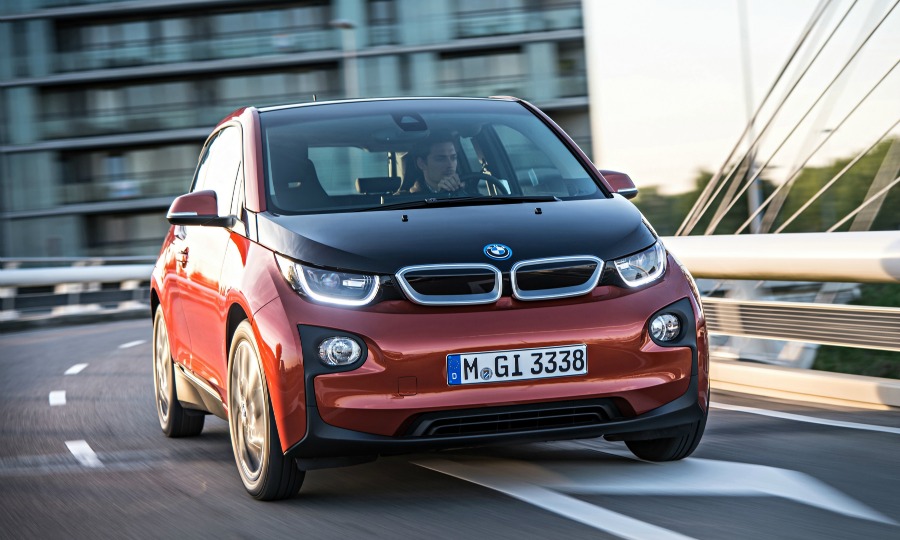
The smallest BMW at this time is the 1-series, and based on that, the Bavarian carmaker has produced a fleet of 1000 i3, purely electric lightweight EVs. BMW started selling these in 2011, and their green-oriented owners are gathering information for other future electric cars.

In 2013 BMW and Toyota announced collaboration on developing electric drive-trains and light-weight carbon fiber body structures together. An electric sportscar, dubbed i8, is in the planning stage.
Update On The 2013 Ford Focus Electric

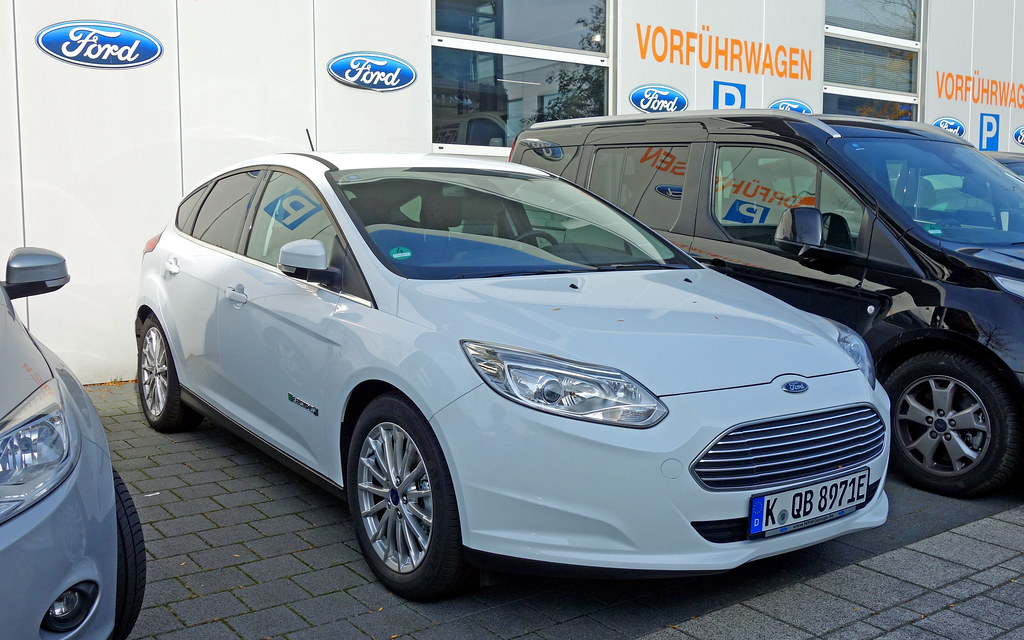
Update On The 2013 Ford Focus Electric

Ford Motor Company’s Focus 2013 Electric is powered by a lithium-ion battery system which gives it a fuel efficiency rating of 110 MPGe city, 99 MPGe highway, 105 MPGe combined. Source: Ford Motor Company 2013 Focus product sheet.

What is MPGe?

It sounds odd, providing miles per gallon figures for a car that uses no gasoline so here’s the offical explanation: Miles per gallon equivalent (MPGe) is used to compare energy consumption of alternative-powered vehicles.

MPGe tells how much gasoline and how much electricity would be used to generate an equal amount of power. One gallon of gasoline equals 33 kilowatt-hours of electricity. Now you know.

Focus specs:

  • Powertrain: Permanent magnet all electric traction motor with single-speed automatic transmission
  • Power: 143 hp, 107 kW, Torque: 184 lb.-ft., 250 Nm
  • Seating: five
  • Ambient lighting with seven switchable colors
  • Standard Audio System by Sony® and HD Radio™ with iTunes Tagging
  • Where built: Wayne Assembly Plant, Wayne, Michigan

Fast Recharge

The all-electric Focus is capable of fully recharging in four hours at home using the available wall-mounted 240-volt charge station. This compares favorably with competitors like the Nissan Leaf.

According to Ford, the Focus Electric offers enough range (up to 76 miles) to meet the daily needs of most American drivers, and a top speed of up to 84 mph. Operative words in both cases being “up to.”

Battery Power

The Focus Electric’s lithium-ion battery system offers more power and less weight than comparable nickel metal-hydride systems. The battery’s power output is 23kWh, with advanced liquid heating/cooling to regulate battery temperature. This helps maximize battery life and miles from each charge. Regenerative braking boosts range by capturing up to 90 percent of energy lost through friction brakes.

What’s the Price? The Focus Electric is available at one of Ford’s certified electric vehicle (EV) dealers. MSRP is $39,200.00. Be sure to ask your tax advisor to see if you qualify for a federal tax credit of up to $7,500 – operative words being “up to.”

Electric Cars Are Charging Ahead

Electric Cars Are Charging Ahead

Paine published his views about EVs in the Washington Post; and who would be better to inform you about one of his –and my- favorite subjects than Chris in his own words, dispelling 5 myths about the electric version of alternative transportation.

1. The electric car is dead.

This myth is partly my fault, perpetuated by the title of my 2006 documentary, Who Killed the Electric Car? The signs back then weren’t promising. Under pressure from car companies and other lobbyists, California rolled back its Zero-Emission Vehicle mandate, which had helped get nearly 5,000 electric cars on the road. The change in the regulation freed carmakers to round up the cars they had leased — and then surreptitiously crush them.

Thankfully, it takes more than a crusher to kill a technology. Today, almost all the major automakers, along with a cast of new players, are investing in, and building, plug-in cars. California’s mandate [for zero emission vehicles] has also made a comeback, and other states are considering similar rules.

Fisker’s struggles can be attributed, in part, to the fact that start-ups in any industry have a high rate of failure, and launching a start-up in the automotive sector is especially expensive. That makes it all the more impressive that Fisker’s rival Tesla turned a quarterly profit this year.

A new report from IEE, part of the Edison Foundation, projects that between 5 million and 30 million electric cars will be on U.S. roads by 2035. “The electrification of the vehicle fleet is a foregone conclusion,” says former GM vice chairman (and former electric-car-basher) Bob Lutz.

Economics, politics and technology all played a role in the turnaround. Soaring gas prices in 2008 got everyone complaining. U.S. manufacturers, stuck with large inventories of low-mileage SUVs and facing bankruptcy, watched with envy as Toyota rode the buzz from its Prius hybrid to become the world’s No.1 carmaker. The chief executives of Detroit’s Big Three further reassessed after being chastised for flying corporate jets to congressional bailout hearings in November 2008. When they returned to Washington two weeks later, they arrived in electric hybrids. Since then, partly with the help of government loans (some already repaid), electric-car technology has made big strides.

2. Electric cars can’t get people where they need to go.

I’ve been driving electric cars for 15 years and have yet to run out of power. But ask people what their biggest hesi¬ta¬tion is about electric vehicles, and they’re most likely to say something about the cars leaving them stranded. This myth is so pervasive that General Motors applied to trademark the name for it: “range anxiety.”

A controversial New York Times test drive in February of Tesla’s Model S, which ended up needing a tow to a charging station, seemed to confirm the fear.

But that test drive — covering more than 500 miles in temperatures as low as 10 degrees [Fahrenheit] — was not your everyday trip. The average American drives fewer than 40 miles a day. That’s well within the 75-mile-plus range of most electric cars. And while batteries do run down faster in extreme cold, on a normal day Tesla’s Model S can go as far as 265 miles on a single charge.

The answer to range anxiety for many carmakers is the plug-in hybrid, an electric car with a backup gasoline engine. The Chevrolet Volt, the Toyota Prius Plug-In and the Ford C-Max Energi all use electric power for the first 20 to 50 miles (or most daily trips) and then switch to gasoline for longer drives.

To be continued tomorrow….

Nissan Explains Why Electric Cars Are So Rare In Boston

Nissan Explains Why Electric Cars Are So Rare In Boston

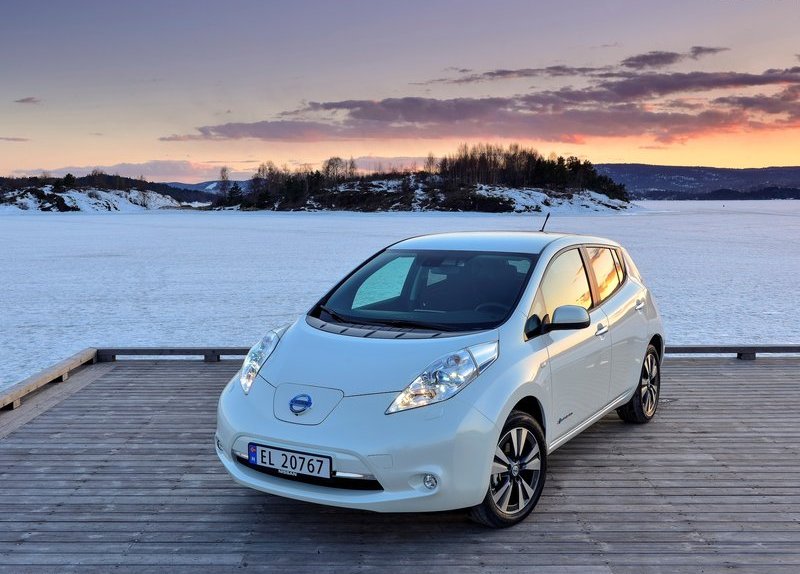
From the way the mainstream media hype electric cars, one would think that they were just around every corner. However, spotting on in Boston is like finding an open parking space on Newbury St. It can happen, but you have a better chance of seeing two baby pigeons playing together. Luckily, Nissan issued a press announcement August 24rth that cleared all this up. Apparently, the EVs are all hiding on the left coast.

Six of the top eight cities that Nissan sells Leafs are in west coast states. Seven out of eight are western if you count Honolulu. New York is Nissan’s 15th largest city for sales and Boston is not even on the list. The reason has a lot to do with the marketing focus of the vehicles by their makers, but also where the money is. Atlanta makes the list at a solid number three, being the only Eastern city to break into the top 10. How did that happen? Bribes. Georgian taxpayers give Nissan Leaf buyers, and other EV buyers $5,000 by way of a state tax credit. That is on top of federal incentives provided by US taxpayers that can add up to $12,500 for EVs. Atlanta also lets the EVs cruise the HOV lanes. High occupancy vehicle used to be the name for those special lanes paid for by gas taxes before there were any EVs. Now they are called “HOT” lanes. The Leaf and the “extended range EV” Chevy Volt vie to be the top selling EV each month. Other types of green-machines like Plug-in hybrids and conventional hybrids are making life tough for the pure EVs though. Lease prices have dropped like a rock and most EVs are seeing double digit reductions in MSRP each year. That makes jumping in now hard for some who would like an EV, but don’t want to be the one who overpaid.

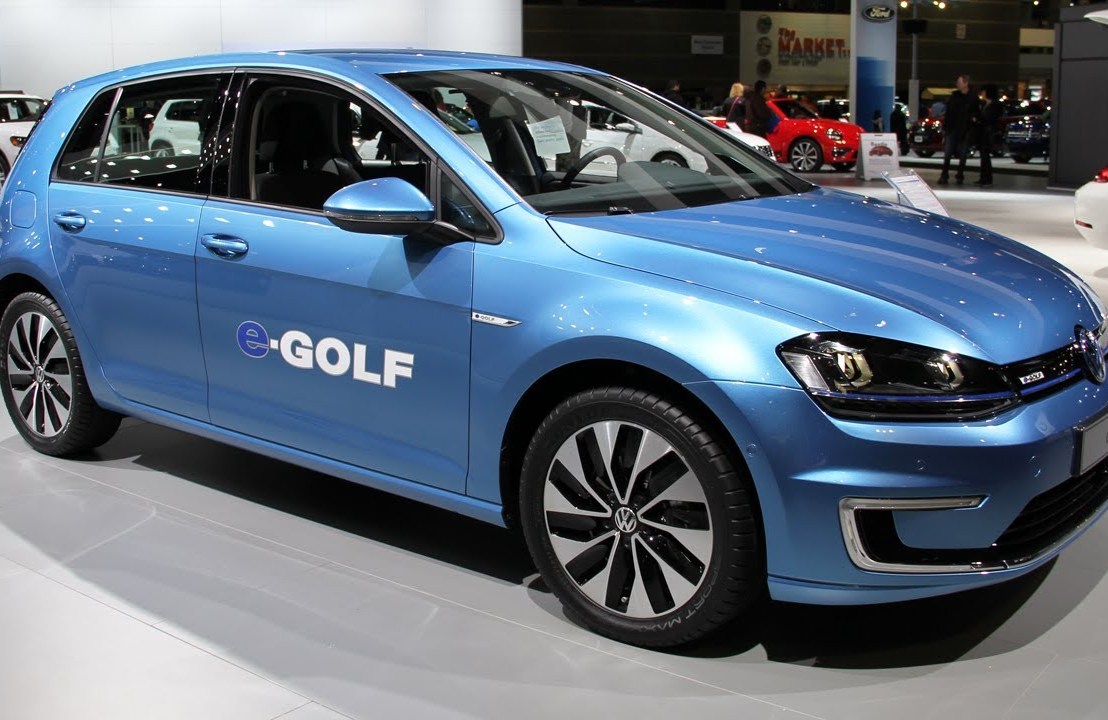
Volkswagen’s e-Golf Electric Car Debuts At Frankfurt

Volkswagen’s e-Golf Electric Car Debuts At Frankfurt

Since the e-Golf is based on a well proven and popular car, it’s expected to offer trademark German car handling and upscale feel to go along with its new found efficiency. Volkswagen says the new e-Golf will have a driving range of 118 miles.

Mechanically, the e-Golf gets a Volkswagen engineered and built drive system which starts with a 115 horsepower electric motor. With a robust 199 ft-lb of torque, it puts power to the front wheels through a new one-speed gearbox.

Volkswagen says it will offer spirited performance, and because it’s electric will offer smooth linear power throughout its operating range. It can accelerate from 0-62 mph in 10.4 seconds according to the company and has a governor limited top speed of about 87 mph.

There are the obligatory driving modes which allow you to select maximum range driving program or dial it up for more power and sporing attitude. The system uses regenerative braking as well to capture power back to the batter on deceleration.

A light-weight lithium-ion battery unit resides under the floor shaped to utilize the center tunnel and under seat areas. This design allows for more cells and less intrusion into the rear cargo area, an issue with many EV’s based on conventional automobiles.

Charging the e-Golf is easier than many EV’s that have come before it. You can charge over night with a 120V plug, but it also comes with a standard 230V charge cord that can be plugged in to a standard wall socket without the use of an external charger.

You can of course use an available quick charger or public charging station as a third alternative for the fastest charging.

It gets some cool new features like LED headlights, the very first Volkswagen to get them. All e-Golf models will be four-doors and come in fully loaded trim levels. This includes top end infotainment and interior comforts, trims, and equipment.

Setting the e-Golf apart visually will be special alloy wheels that are designed for maximum aerodynamics, blue accent strips in the trim, and unique fascias front and rear. The 16” alloy wheels get low rolling resistance tires to maximize range. When the e-Golf arrives next year pricing will likely be at a slight premium over competitors like the Nissan Leaf and Ford Focus Electric. Expect all the connectivity driving and planning apps which allow you to optimize your charge in more way than you can ever imagine, from the comfort of your smart phone.